What Happens to Your Baby’s Cord Blood After Collection? Inside the Lab and Storage Process
What Happens to Your Baby’s Cord Blood After Collection? Inside the Lab and Storage Process
You consent to cord blood banking, your baby is born, and a collection bag leaves the delivery room. Then what? For most parents this is where the process disappears into a black box, and a black box is hard to trust with something you cannot collect twice.
Here is the whole journey: the first few minutes, the first 48 hours, and the next three decades. Where there is a number, we have given it.
| Step | What happens | Timeframe | Why it matters |
|---|---|---|---|
| 1. Collection | Cord blood drawn after clamping and cutting | 1 to 2 minutes | One-time opportunity, no risk to mother or baby |
| 2. Transport | Validated, temperature-controlled kit to the laboratory | Same day | Cell viability declines with time and temperature |
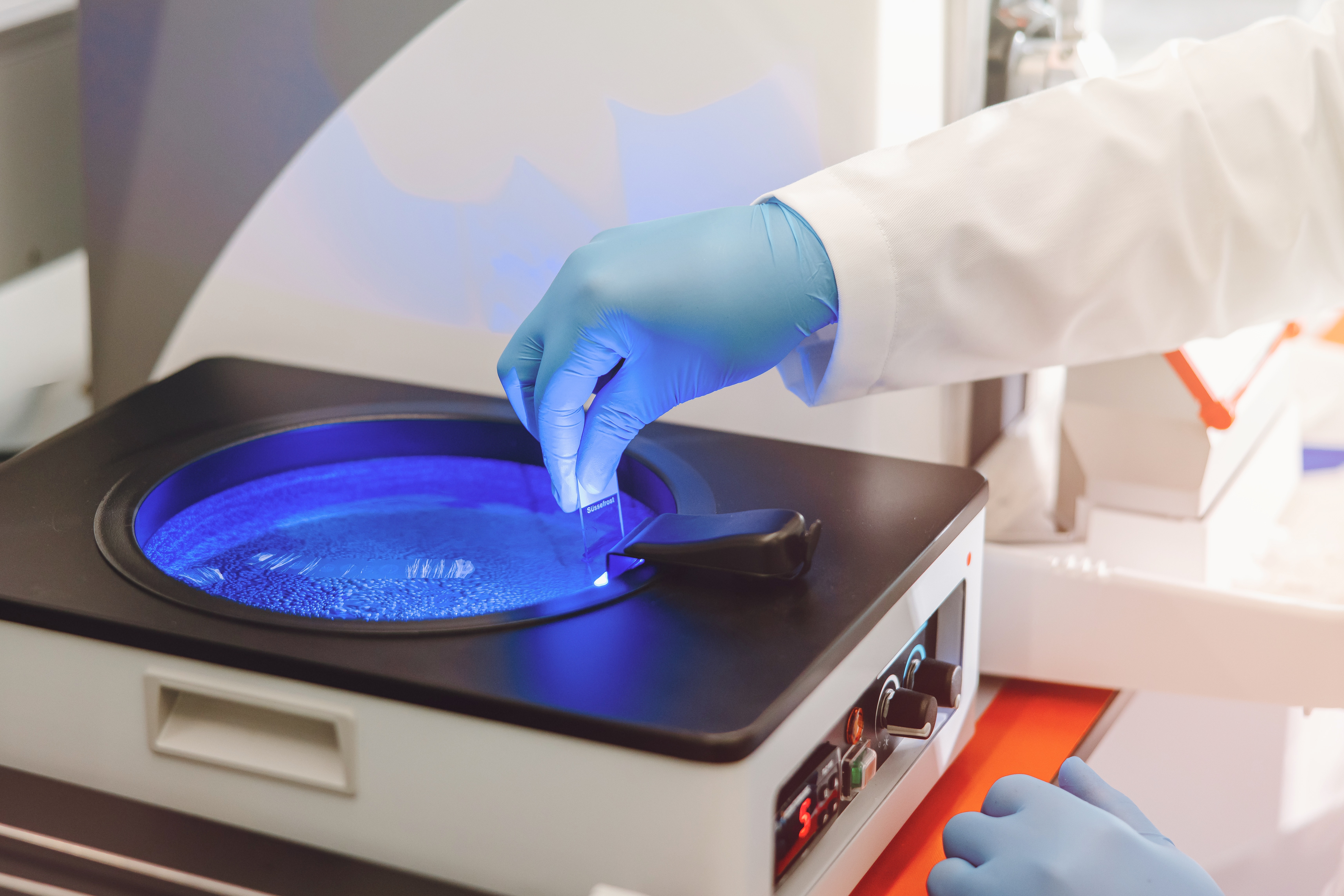
| 3. Processing | Volume reduction, cell counting, screening | Within 24 to 48 hours | Determines whether the unit is transplant-grade |
| 4. Freezing | Cryoprotectant added, controlled-rate freeze | Hours | Freezing too fast or too slow destroys cells |
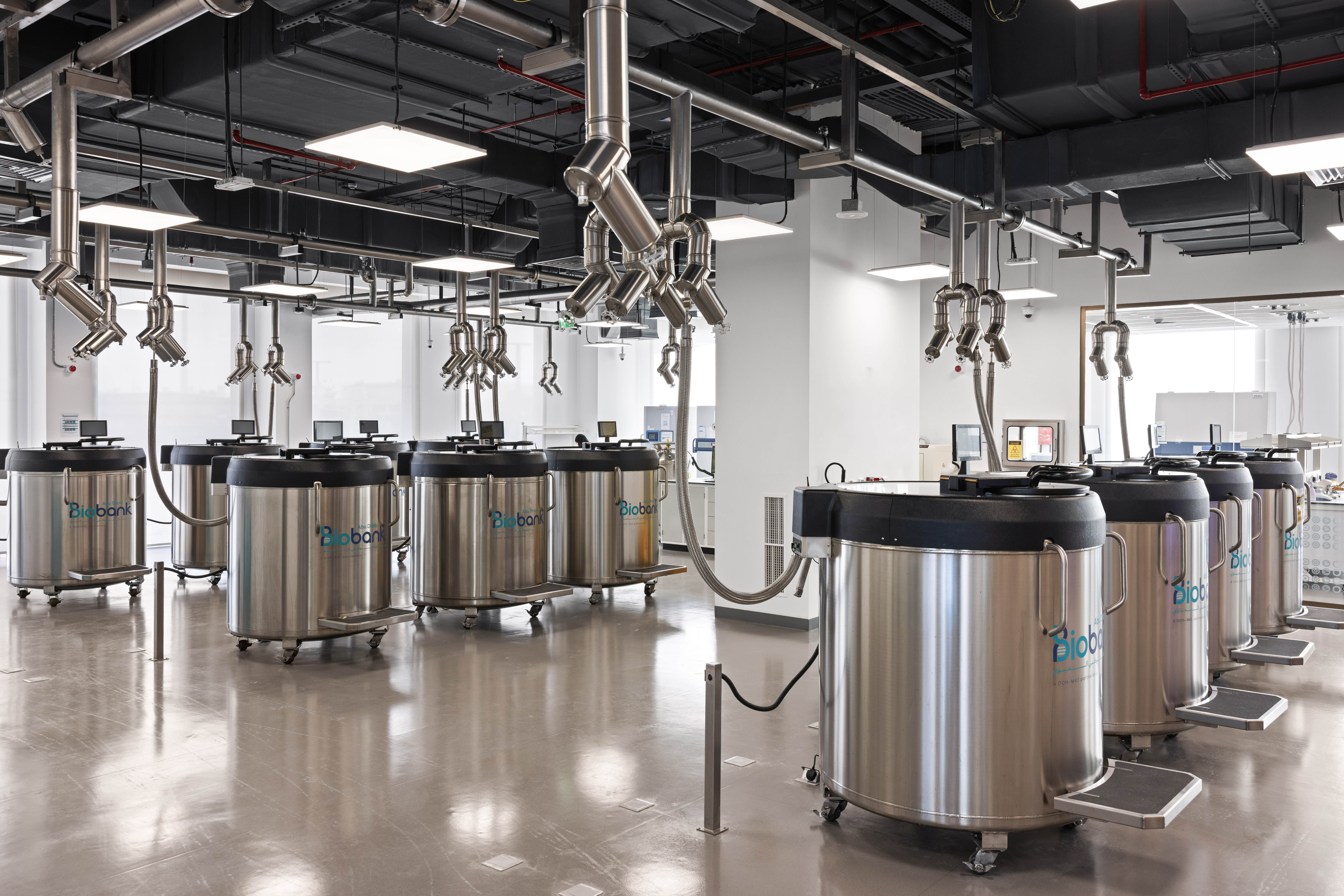
| 5. Storage | Vapour phase, below minus 150C, monitored | Up to 30 years | Biological time stops; the unit stays as it was |
Step 1: Collection at Birth
Cord blood is collected after your baby is delivered and the umbilical cord has been clamped and cut. The cord and placenta are no longer attached to your baby, so nothing about the collection touches the newborn.
A trained collector inserts a needle into the umbilical vein and the remaining blood drains by gravity into a sterile bag containing an anticoagulant. It takes one to two minutes. There is no pain, no additional procedure and no risk to mother or baby, and it works with both vaginal delivery and caesarean section.
The window is short. Cord blood must be collected within minutes of delivery, before the vessels collapse and the blood clots. This is why the arrangement has to be made before you go into labour rather than decided in the delivery room, and why banks work through agreements with specific hospitals rather than turning up on request.
Delayed cord clamping and collection are not automatically incompatible, but a longer delay reduces the volume recovered. If delayed clamping matters to you, raise it with your obstetrician in advance so both can be planned.
Step 2: Transport to the Laboratory
The sealed bag goes into a validated transport container designed to hold the unit within a defined temperature range, typically close to room temperature rather than chilled or frozen. It is logged, sealed and tracked from the moment it leaves the hospital.
Time is the constraint. International practice is to process cord blood within 24 to 48 hours of collection, because the number of viable stem cells falls the longer the unit sits unprocessed. This is the single strongest practical argument for a laboratory inside the UAE. A unit travelling from an Abu Dhabi delivery room to a laboratory in Masdar City is a short road journey. A unit flown to Europe or South Asia faces flight schedules, customs and handling, all inside the same clock.
UAE law now requires banks collecting here to process and store here. Our guide to UAE cord blood banking laws [LINK PENDING: article one] explains the requirement and where it comes from.

Step 3: Processing and Testing
This is where a cord blood bank either earns its fee or does not. Processing takes place in a controlled cleanroom environment, and under UAE regulation the cell processing area must meet at least Grade D air quality standards.
Three things happen:
- Volume reduction.A typical collection is 60 to 120ml, most of which is red cells and plasma. The laboratory separates and concentrates the stem-cell-rich fraction, reducing the unit to a small volume that can be frozen efficiently and thawed quickly.
- Counting and viability testing.The unit is measured for total nucleated cell count and CD34-positive cell count, the markers that determine whether it is large enough to be clinically useful, and tested for the proportion of cells still alive.
- Screening.Maternal and unit samples are screened for infectious disease markers, and the unit is cultured for bacterial and fungal contamination. UAE regulation additionally requires nucleic acid testing and a genetic test for haemoglobin disorders, which is a meaningful requirement in a region where thalassaemia and sickle cell traits are relatively common.
Blood group and HLA tissue type are also recorded, so the unit can be matched quickly if it is ever needed for a sibling or relative.
If any result is positive or non-conforming, the unit cannot be released for clinical use. You are told. A bank that has never had to make that call is a bank that is not testing properly. Unfamiliar terms are explained in our glossary .
Step 4: Cryopreservation
Cord blood is mixed with a cryoprotectant, cooled at a controlled rate of roughly 1 to 2C per minute, then transferred to storage in the vapour phase above liquid nitrogen, below minus 150C. Liquid nitrogen itself boils at minus 196C.
Each element of that sentence exists for a reason.
- The cryoprotectant, usually DMSO at 5 to 10 per cent, stops sharp ice crystals forming inside the cells and rupturing their membranes.
- The controlled rate matters in both directions. Freeze too slowly and cells are damaged by the concentration of solutes around them. Freeze too quickly and ice forms inside the cell and kills it. A controlled-rate freezer holds the curve precisely.
- Vapour phase rather than immersion. If a bag develops a micro-leak under liquid, fluid exchange can carry contamination between units. Storing in the vapour above the liquid removes that risk.
Below roughly minus 130C, the temperature at which water can no longer form ice, biological activity effectively stops. Nothing metabolises, nothing degrades, nothing ages. A unit held below minus 150C in year 29 is, biologically, the unit that was frozen in year one.
Step 5: Long-Term Storage and Retrieval
Stored units are held in monitored cryogenic tanks with continuous temperature logging, alarms, backup nitrogen supply and restricted access. Every movement is recorded against the unit identifier, which is the documented chain of custody that regulators inspect.
How long does it stay good? Published studies have shown cord blood cryopreserved for 21 to 23.5 years retaining biological qualities equivalent to the day it was frozen. No expiry date has been established, because the technology is younger than a human lifespan. Storage terms of 30 years, including ours , reflect contract length rather than a known biological limit.
UAE regulation also requires that units held for long periods are recollected and retested at defined intervals, so storage is not simply a case of freezing a bag and forgetting it.
Release is physician-directed. A transplant centre, not the family, requests the unit; the bank verifies identity and documentation, ships it in a dry shipper that holds cryogenic temperature in transit, and the receiving centre thaws it at the bedside. The unit is never thawed and refrozen.
Why the Facility You Choose Matters
Every step above is a place where a corner can be cut invisibly. That is what licensing and accreditation exist to prevent. Abu Dhabi Biobank is DoH-licensed, operated by the Department of Health – Abu Dhabi with M42 , and processes and stores every unit at its Masdar City facility inside the UAE. If you want to understand the process in more detail, speak to our medical advisors or read more about cord blood banking .